Haulage companies
Packages and returnable containers: who loaded what and who owes what
Scan the label on loading, scan the label on unloading, and every action stays in the log. Plus a returnable-container balance per customer.
Labelled packages
Every item has a path
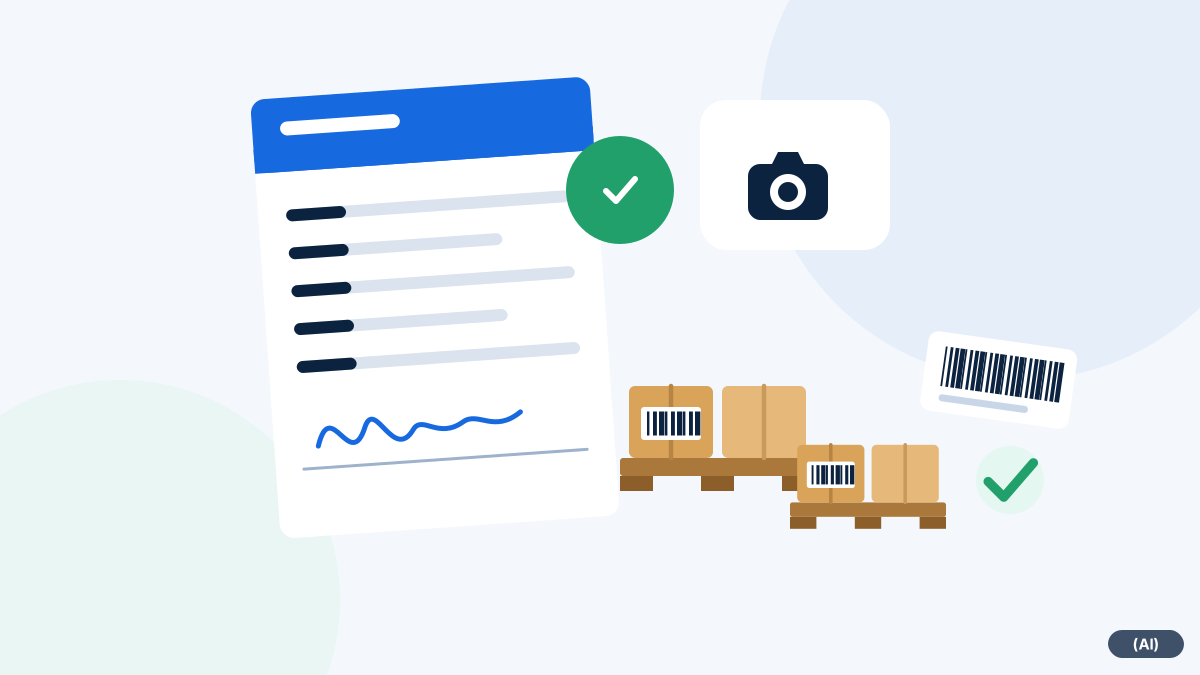
Packages carry a label. They are scanned on loading and on unloading. Every scan is logged and never deleted, even if an error is corrected later: the correction is added, and the original entry remains.
- Scan on loading: which item is on which vehicle
- Scan on unloading: which item has arrived at the customer
- Missing items are spotted during reconciliation
- The log cannot be tidied up after the event
Loading to measure
When loading, it is not only what fits that counts, but how. fleet365 keeps weight, volume and pallet spaces separate. A vehicle has cubic metres and it has pallet spaces, and these two figures are never converted into each other. A pallet is not simply a certain volume, and a load of heavy goods is limited by weight even when there would still be room.
This is how a load can be checked for weight, volume and pallet spaces before the vehicle sets off.
Returnable-container balance per customer
A balance that both sides can follow saves arguments.
Pallets, roll cages and other returnable containers travel back and forth between the haulage company and the customer. Whoever delivers a container may take a certain quantity of empties back. For this, fleet365 keeps a balance per customer: how many were delivered, how many taken back, how many are still outstanding.
Example: a customer's returnable-container balance
A scenario, not a customer experience.
A scenario: a customer regularly receives deliveries on pallets and returns empty pallets. After a few weeks the figure in the accounts does not match the customer's. Without a record, a laborious search through delivery notes begins.
With a balance per customer, both sides can see when and how many returnable containers were delivered and taken back. Discrepancies become visible early, not only at the year-end close.
What a log that deletes nothing means
Trust arises where nothing can be changed after the event.
Mistakes happen: a label is scanned twice, an item is assigned to the wrong vehicle. In fleet365 nothing like that is overwritten. The correction appears as a new entry next to the old one, and both remain visible. Anyone checking later sees the whole path and not just the result.
- Every scan has a time, an action and a stop
- Corrections are recognisable as such
- The log belongs to the order and can be retrieved in case of queries
- Returnable-container postings also remain traceable
In everyday terms this means: anyone who has to prove in a dispute what was loaded has a record to hand. Whether it is sufficient in an individual case is something you clarify with your customer and, if necessary, your legal adviser.
Frequently asked questions
Is every scan stored?
Yes. Every scan is logged and not deleted.
How is the vehicle loaded?
Separately by weight, volume and pallet spaces. The values are never converted into each other.
Can I keep returnable containers per customer?
Yes, as a balance per customer: delivered, taken back, outstanding.
Is this a merchandise management system?
No. fleet365 accompanies load and returnable containers during transport and delivery, but does not replace a warehouse or merchandise management system.
Would you like to see fleet365 in action?
We show you tracking using your vehicles and workflows. With no obligation, in German, from Austria.