Haulage companies
Waiting times and loading bays: the wait is on record
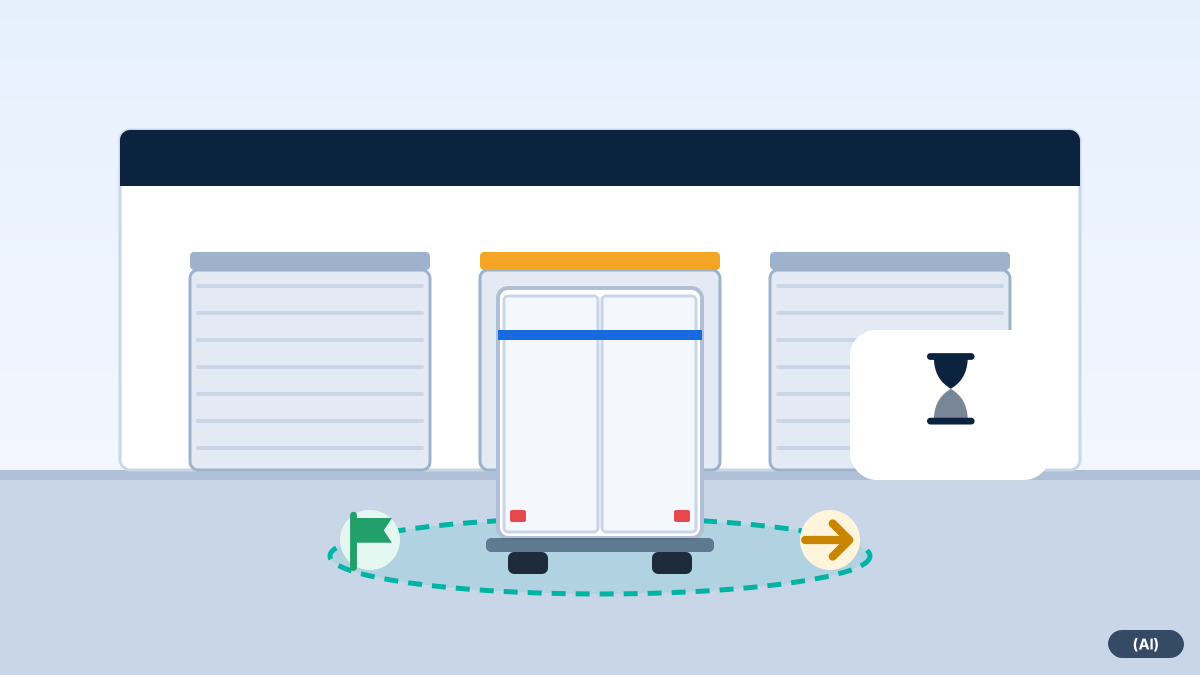
How long did the lorry stand at the gate before it was unloaded? With a geofence around the customer you measure arrival and departure without the driver having to note anything down.
The problem
A stationary time of one to two hours at the loading bay is not unusual. It costs driver time, upsets the plan and is rarely paid for, because nobody can prove how long the wait actually was. The driver remembers roughly, the customer remembers differently, and the delivery note gives only the time of the signature.
Arrival and departure from the geofence
You draw an area on the map around the customer's warehouse, building site or depot. When the vehicle enters it, an event with a timestamp is created. When it leaves the area, the next one is created.
- Arrival and departure automatically, without any action by the driver
- The waiting time is the difference between the two
- Alarm on entering or leaving, if you set that up
- History on the map with stops and timeline
Why this helps in conversations with customers
Anyone who can document waiting times with timestamps talks differently to the shipper. Instead of ‘we waited a long time’ there is a record: arrival at the gate, departure, duration. That is the basis for a factual discussion about waiting times and about agreed time windows.
What dispatch sees
Fewer ‘When is the lorry arriving?’ and ‘Has it left yet?’
Arrival
The vehicle reaches the customer, and dispatch sees it without a call.
Waiting time
The waiting time runs along and can be analysed later.
Departure
When the vehicle leaves the zone, the stop is complete and the next trip begins.
Example: a stop with a long wait
A scenario, not a customer experience.
A scenario: a vehicle reaches a customer's premises at eight o'clock, and unloading begins shortly after ten. The history shows the arrival at the geofence, the delivery note shows the time of the signature. The difference is the time the vehicle was on the premises.
For resolving the matter with the shipper you have a record instead of an estimate. How far the time between arrival and the start of unloading is attributable to the customer remains a question for the individual case.
How to set up geofences that suit the analysis
- Draw the area around the whole site, not just around the gate
- For large sites, create separate areas, for example gate and loading bay
- Give each area a clear name so that the analysis stays readable
- Check the zone in the history after the first trips and adjust it
You will find more on zones and alarms under Geofences.
Frequently asked questions
Can I document waiting times at the customer's premises?
Yes. Arrival and departure are recorded with a timestamp via a geofence. How this can be used contractually depends on the individual case.
How accurate is the measurement?
That depends on the size of the geofence and the tracking quality. Draw the area so that it suits the site.
Do customers receive a notification when the lorry arrives?
No, the system does not send anything to customers on its own. A customer link is planned.
Is there slot management for loading bays?
That is planned. Today you get arrival, departure and waiting time for each stop.
Would you like to see fleet365 in action?
We show you tracking using your vehicles and workflows. With no obligation, in German, from Austria.